Sunday, 2 March 2025

Day 23 - 28/2 - Six degrees of separation

Today was all about the travelling.


We started with a fond farewell to Explora, including a final goodbye to some of our friends (Gerry, a lovely Chilean lady called Marcia who had been on a few of our trips) - plus a hello and goodbye to a Canadian couple who’d just arrived, who were in the same hotel with us at Buenos Aires! We even had time for pancakes at breakfast - Jemima’s first opportunity, so she was happy.


And then, just after 10am, the journey began.


1. Minivan to airport - 1 hour


A drive through the desert, leaving the oasis of San Pedro to get to the oasis of Calama, a large town, site of the biggest copper mine in the world. (It is weird seeing an oasis from a distance - it is literally a puddle of lush green in a sea of dry grey-brown - completely out of place.) Calama airport was small, but like all our airport experiences in South America, very efficient.


2. Flight from Calama to Santiago - 2 hours 


Domestic flight - all very easy.


3. Walk between domestic and international terminals, and wait for next flight - c 4 hours


Again, easy, once we had confirmed that our luggage was going directly to Florianopolis and we didn’t need to do anything. (With all these flights, I’ve had a low-level fear of lost luggage - it would be such a pain…) Santiago airport is huge and very modern. The usual stamping in and out as we were now leaving Chile (and the Spanish-speaking world! Back to struggling in Portuguese…).


Our 2.5 hours stopover turned into nearly 4 thanks to a flight delay, but again, pretty painless (apart from the most disorganised McDonalds I’ve ever been to - our first on this trip, and the famed processes were NOT functioning as designed…)


4. Flight from Santiago to Florianópolis, Brazil - 3 hours


Another easy flight - we even got fed! (Cheese and ham toastie, fruit, and chocolate - definitely one up on Ryanair.)


It was instantly SO different to Atacama - back to the tropics. The humidity hit you straight away, and outside the airport there were huge planters filled with giant green palms - we were definitely not in the desert any more…


5. Uber from airport to resort - 1 hour 10 mins


It was pretty late by the time we arrived in Florianopolis, but Uber was ready to help - they even had a designated signed Uber meeting point outside the front of the airport. Jemima was asleep within 5 minutes, so I spent the drive holding her head up.


First views of Florianopolis (which is a large island attached to Brazil’s mainland by bridges) - very modern, with big highways stretching up its west coast lined with interior design shops, or car sales garages. At the north-west corner we turned inland through what looked like the Magaluf of Florianopolis (fittingly called Ingleses), where people looked like they’d just left the beach, even at 11pm, and the bars were heaving.


Our hotel is in the north-east corner, and when we got there it looked huge. And from check-in, definitely a “resort” - we had keycards with lanyards…


6. Shuttle from entrance to our hotel - 10 mins


We were booked into the hotel, rather then one of the many self-catering villas at the Resort, and this was down near the beach. So our final stage was a shuttle ride to the hotel, where the room looked a bit more spartan than we were expecting, but with a fabulous view over the beach. Too tired to think any more, we fell into bed at about midnight.


14 hours after we’d started our journey, it was finally over.
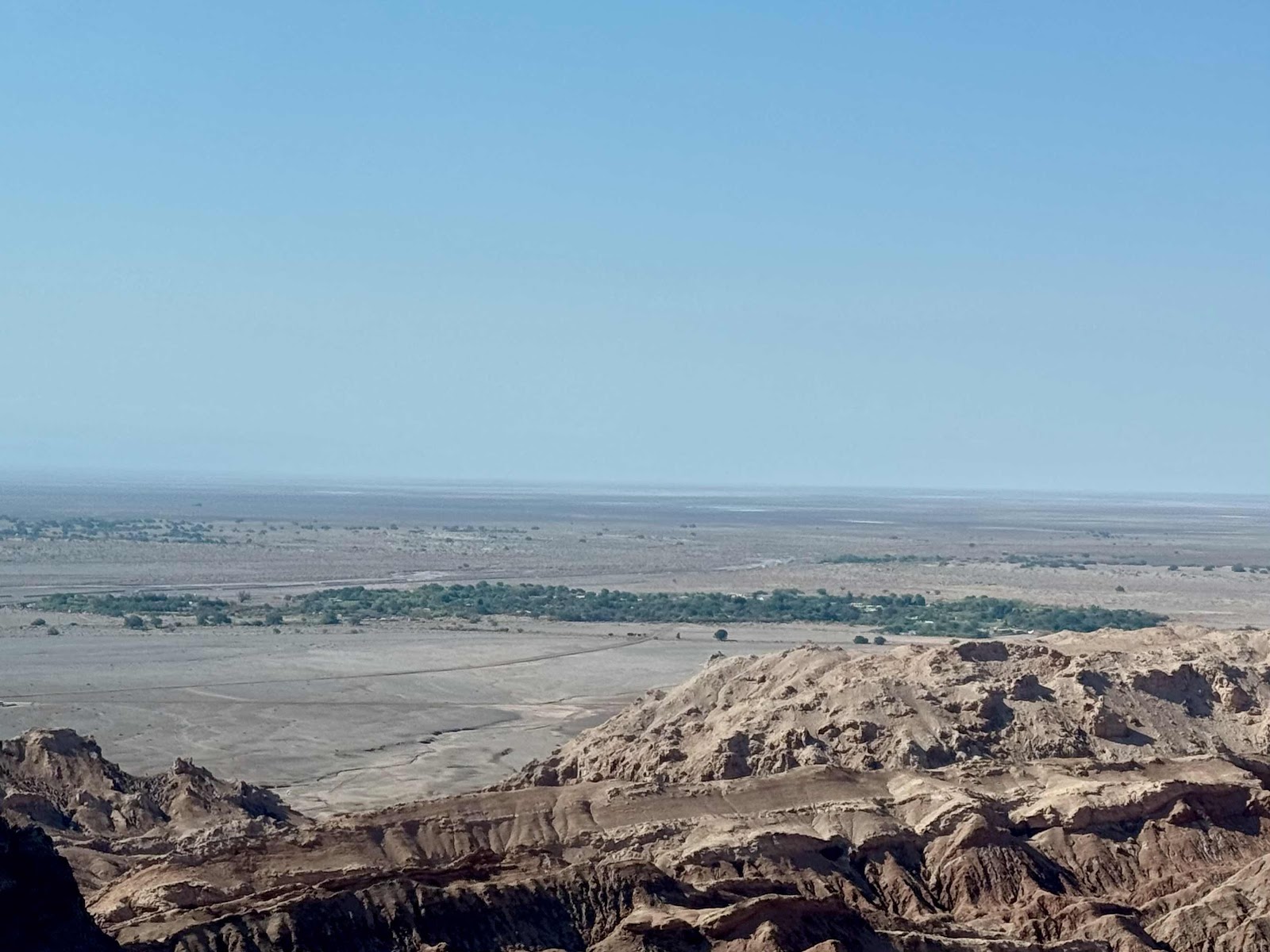


Only one photo from today: the oasis of San Pedro


Day 22 - 27/2 - Driest place on earth?!

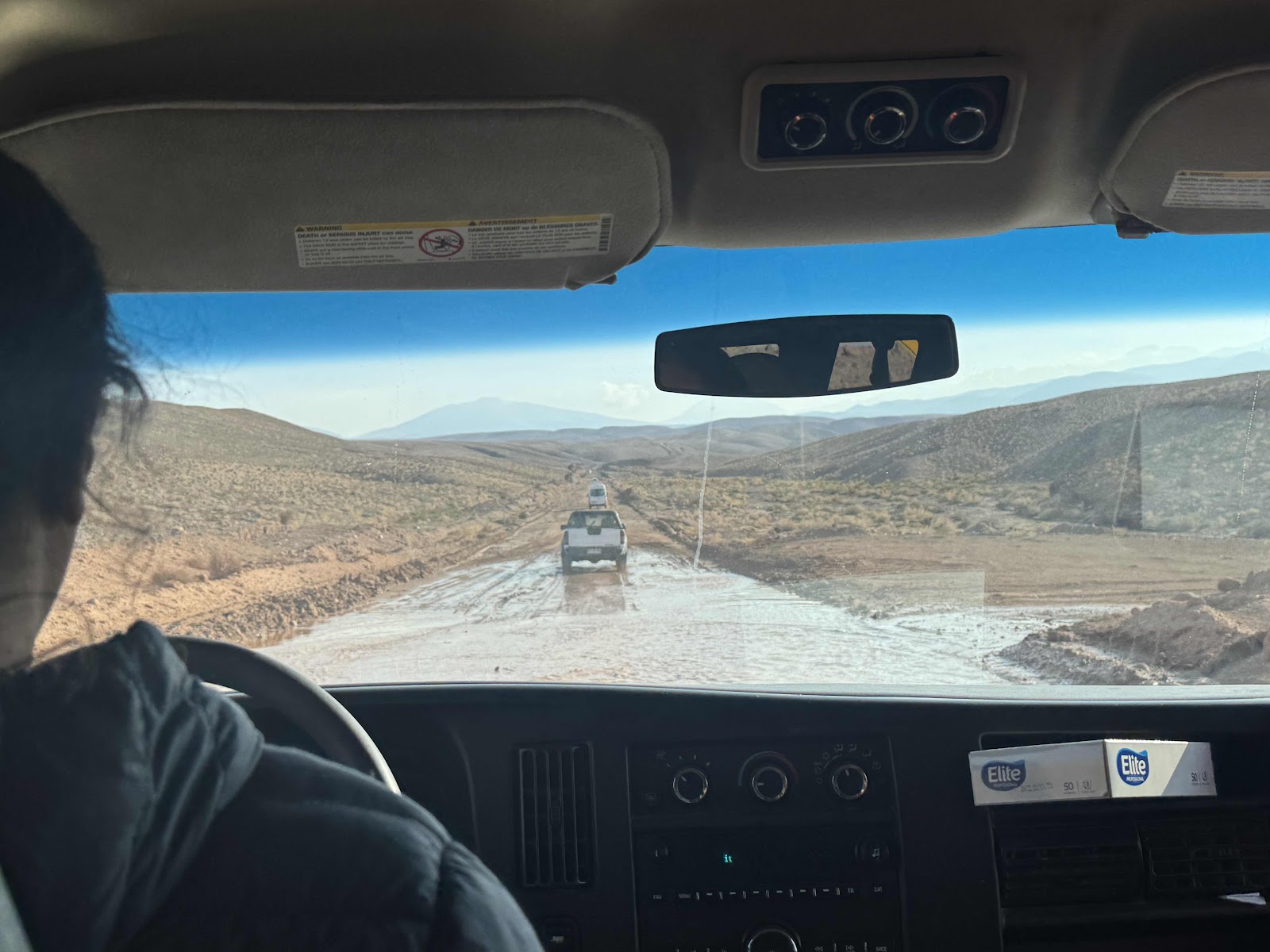
Our plans for our final morning’s expedition changed twice - the unexpected rain meant various routes were now too dangerous. So Jemima and I (minus Kevin, who decided to walk into town instead) teamed up with Jacob (English) and Tory (Canadian), both young doctors and experienced hikers who did medical school in the UK and now worked in Toronto - Jacob specialises in poisons, which Jemima LOVED, given her current murder mystery addiction - they had a long conversation about arsenic and strychnine. 


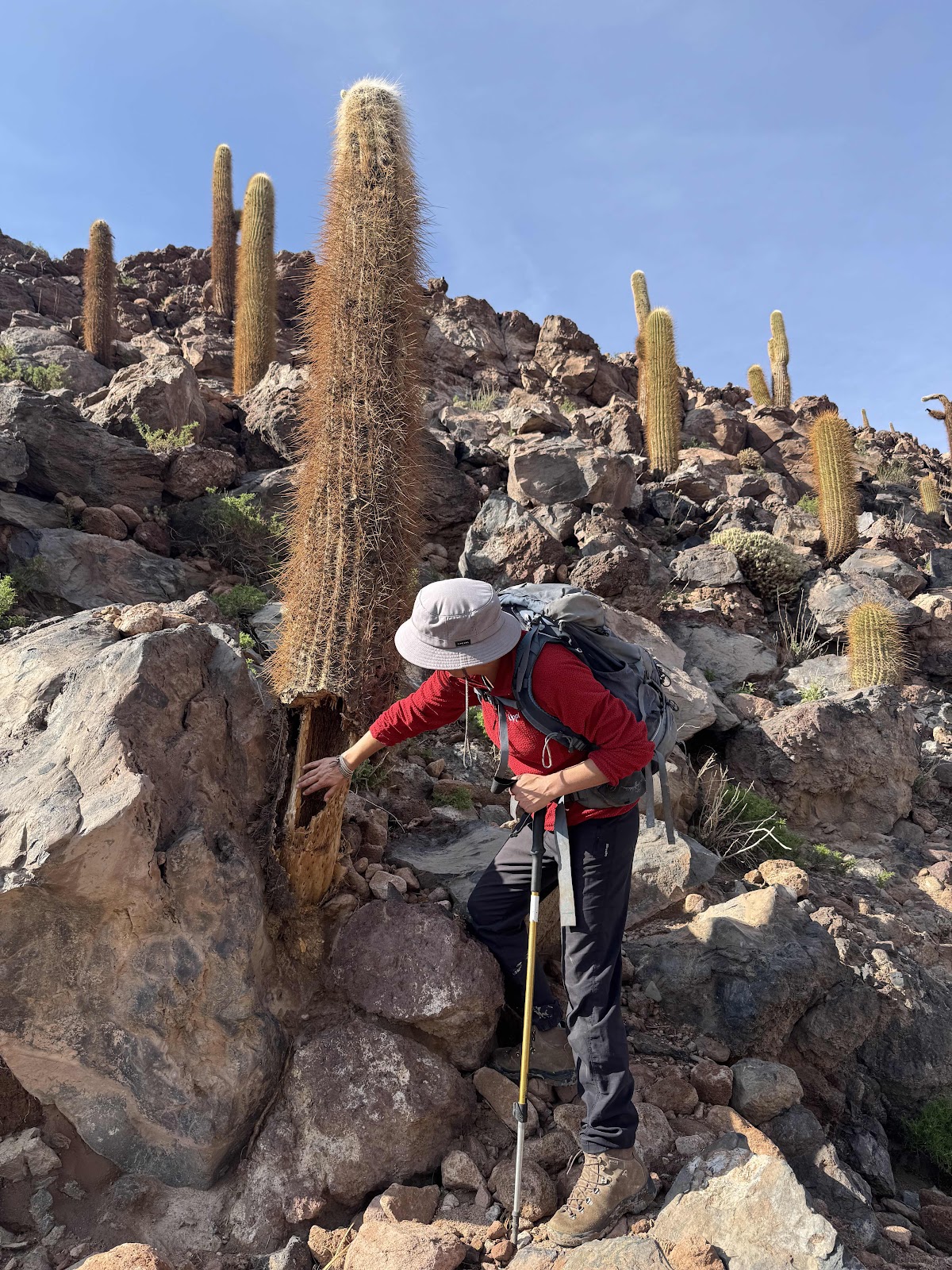
This was our most physical hike yet - clambering over rocks, clinging to handholds, with fairly big up and downs into a cactus-lined canyon with a river gushing down the middle (Tory is 6 months pregnant, but still put me to shame…).


We had the wonderful Carolina again, and she taught us this time about the huge cardones cactuses we’d seen in Argentina - they only grow 1cm per year, so some can be 1000 years old; the insides include a woody layer used by local people for building (although they’re protected now, so they can only be used if they die naturally).


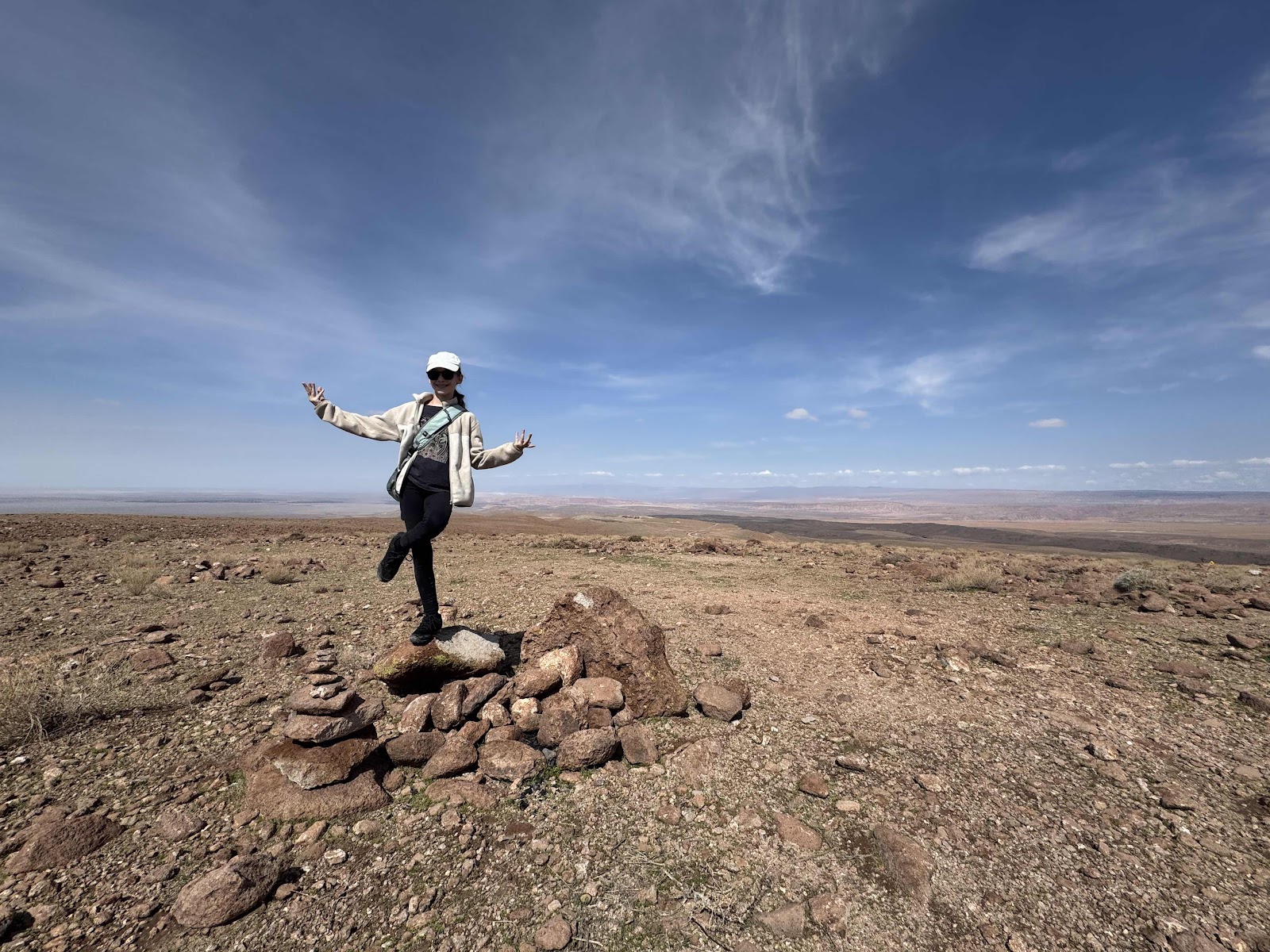
We could only do the first third of the hike unfortunately - normally it would involve hopping across the river to navigate down the canyon on both sides, but the river was too high. So we went back the way we came, Jemima leading again, and instead went up to a mirador (viewpoint) with incredible 360 degree views over the desert. Jemima and I built a cairn - they’re all over the landscape here; we had an unexpected but never unwelcome second breakfast, including vicuña salami, and returned to base to meet up with Kevin, who’d had a lovely time exploring the town.


All the exertion of the last few days was now hitting me - I was feeling very tired. So after lunch and a rest in bed we decided to cancel our final planned exploration - a bike ride around the oasis - and walk into town instead (Jemima bribed with an ice cream from San Pedro’s famous ice cream place, Babalú). The skies were looking ominous but we decided to risk it minus umbrellas or rain jackets…


It was only 10 mins to the main pedestrianised street, running the gauntlet of the many (friendly) dogs roaming around. It was clearly set up as a tourist destination, with tour organisers next to tat shops next to restaurants with people outside trying to tempt you in, but it was still very picturesque - all the shops had carved wooden signs, and it was very tidy and well-kept. We found the main square and the church - the second oldest in Chile, originally dating from 1557, with its beautiful cactus wood gates and roof. You could also see the ubiquitous triangles on the wall surrounding the church yard.


Another of my favourite Carolina stories: you see this triangle, or a three stepped pyramid, everywhere in San Pedro. Apparently it has two meanings: first, of course, the volcano, which has a huge ceremonial role for the village (local people were buried facing the volcano, and each one has some sort of ritual place on it, either at the base or the top). And second, it’s a reference to the Andean trilogy: first, the condor, representing the sky and the spirit world; second, the mountain lion (puma), representing the material world, and human and animal kind; and finally the snake, representing the underground rivers, and death. I love that this symbolism is not only tops most of the walls round here, but also those surrounding the church…


We took a walk through a passageway lined with llamas, blankets and local herbs for sale, Jemima and I on the hunt for a fluffy vicuña to bring home, like we’d seen in Purmamarca. While we were meandering, the threatened rain came with a vengeance, with a thundering on the corrugated plastic roof. We took our time choosing, hoping it would slacken, while stallkeepers frantically moved stock away from the drips. 


When the worst was over we took our chances, me picking my way through the muddy puddles in my Birkenstocks (definitely not dressed for this), heading for shelter in the ice cream shop. This was just as good as had been promised - even having vegan ice cream for me! We walked back through the drizzle while we ate, and just made it home before the heavens opened properly again. 


We’d made friends with Gerry, a nice American travelling on his own, so had asked him to join us for dinner for our last night. He’d narrowly escaped being struck by lightning on his trek that afternoon (“this is very dangerous”, said his guide, as they started on the final flat stretch of their hike, with lightning landing all around them - “go quickly”). This turned into an evening of incredible stories as this was only his 5th most life-threatening experience, after being caught up in riots in Egypt in the 70s, nearly being kidnapped by the Shining Path in Peru, and nearly being stranded in the jungle with unfriendly military in Burma. 


Sadly the weather meant our final experience - viewing the night sky from Explora’s observatory - was cancelled, because of the cloud cover. This is supposed to be an amazing place for astronomy because of the lack of light pollution - and clear skies. Ah well, next time…


Driest place on earth?! Not for us! But it’s still been an incredible experience.*


* For factual accuracy: the driest place on earth is actually the MIDDLE of the Atacama Desert, which hasn’t seen rain in over 500 years. But this level of rainfall is still very unusual for San Pedro…


Flooded road


The cactus canyon hike


Alive above, dead below so you can see the “wood”


Climbing


Hiking buddies


Heading back


Cairn balancing


Snack with a view


San Pedro de Atacama


The Catholic church with the pagan wall


Cactus wood gate and ceiling


Ice cream and puddles


Rainbow over the wildflowers outside

our bedroom window


Saturday, 1 March 2025

Day 21 - 26/2 - Part Two - Deliciosa in the desert

This afternoon was the expedition Jemima had been looking forward to the most: horse-riding!


The hotel breed their own horses on an estancia near Santiago - a combination of Chilean, English and Arabian to get the right balance of strength, stamina and temperament. The stables were at the entrance to the hotel so we’d seen them as we’d left on our other adventures, but now it was our turn to ride them!


Kevin also decided not to join this outing - he’s not a fan of riding, whereas I used to have lessons 35 years ago so have some experience. But this was Jemima’s first time! We were joined by Jane (from the geyser outing), so there were only us three, plus Freddy (a local man and horse expert who led the way), and Nacho, who was our guide. 


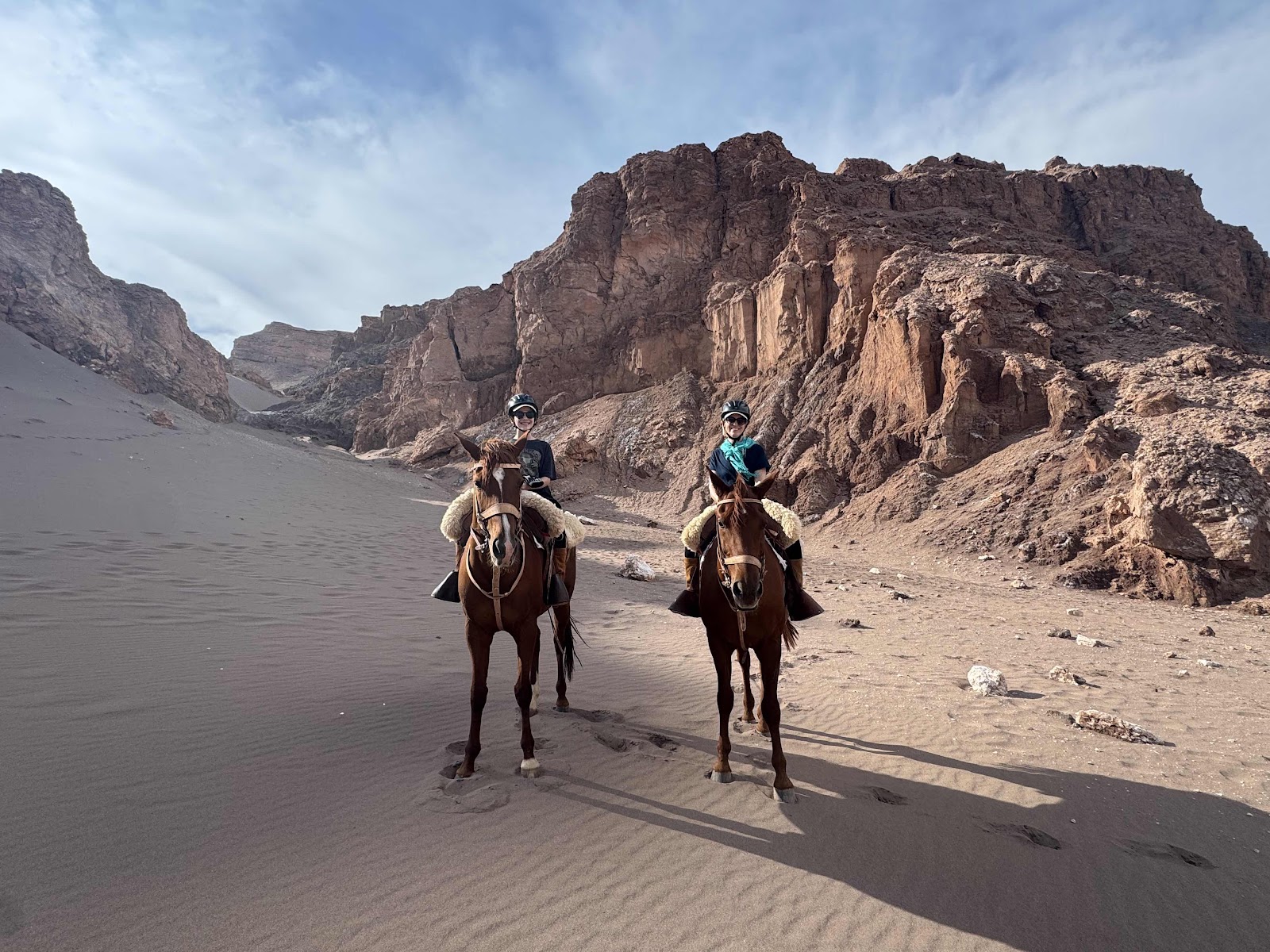
I’d opted for the Chilean rather than English saddle, partly because it was local, partly because it looked like an armchair: really thickly padded with sheepskin, plus shaped with a huge pommel to hold onto. After a brief lesson in how to hold the reins and steer (all in one hand, the Chilean way), we were given some Velcro leather chaps for our calves, a riding helmet (which we all chose to put over our caps, given the sun), and then each allocated a horse, mounting via some stone steps (very civilised). I can’t remember the name of mine, but Jemima’s was Deliciosa, meaning Delicious. And then we were off!


I had thought we might be led, given this was the beginners’ level group, but the horses were so well-trained it wasn’t necessary - they followed one another in a line through the roads around the hotel, through the edge of the San Pedro oasis, and then out into the desert. It was 5.30-ish,the sun was still strong, but lower in the sky, and there was no-one around apart from the odd truck on the road in the distance, and one other horse rider. Moving through the desert from this perspective was different somehow - still slow enough to take it all in, but from a different height, and in harmony with a horse - it was exciting and peaceful at the same time.


We stopped at the edge of a sand dune for some water, and that’s when the thunder started - just like the afternoon before, the horizon was lit up with a lightning storm over the Andes - safely far away but very dramatic: the sky turned dark grey, bisected by the lightning flashes, with a rainbow arching above the bright sandy desert floor still reflecting the sun. After a quick check no-one had vertigo, we started the route home, which took us along a high, narrow sand ridge, with a stony dune falling away either side. I was very relieved the horses all knew the way! 


Then too soon for all of us, we were back. Jemima loved it and looked very at home in the saddle - Freddy asked the guide in Spanish if she had riding experience - he said he didn’t think it was her first time. (I had the inevitable questions about starting riding lessons when we’re home - we’ll see…) And I loved it too - it’s been a long time since I’ve been on a horse, but it is a wonderful way to experience a place - a highlight of my life was a sunset ride in the desert around the pyramids in Cairo (20 years ago).


Another amazing day in the Atacama Desert! Only one day to go…


I have a video that includes lightning as well as a
rainbow, but it’s so fast I can’t screenshot it
as a photo! Here’s the rainbow at least


Day 21 - 26/2 - Part One - Andean animals

Thermal base layer, fleece, packable gilet, waterproof, woolly hat - we’d been warned to dress warmly for our morning expedition. Two reasons: first, it was early (leaving at 7am); and second, it was high - we were going up to 4300m to the geyser field.


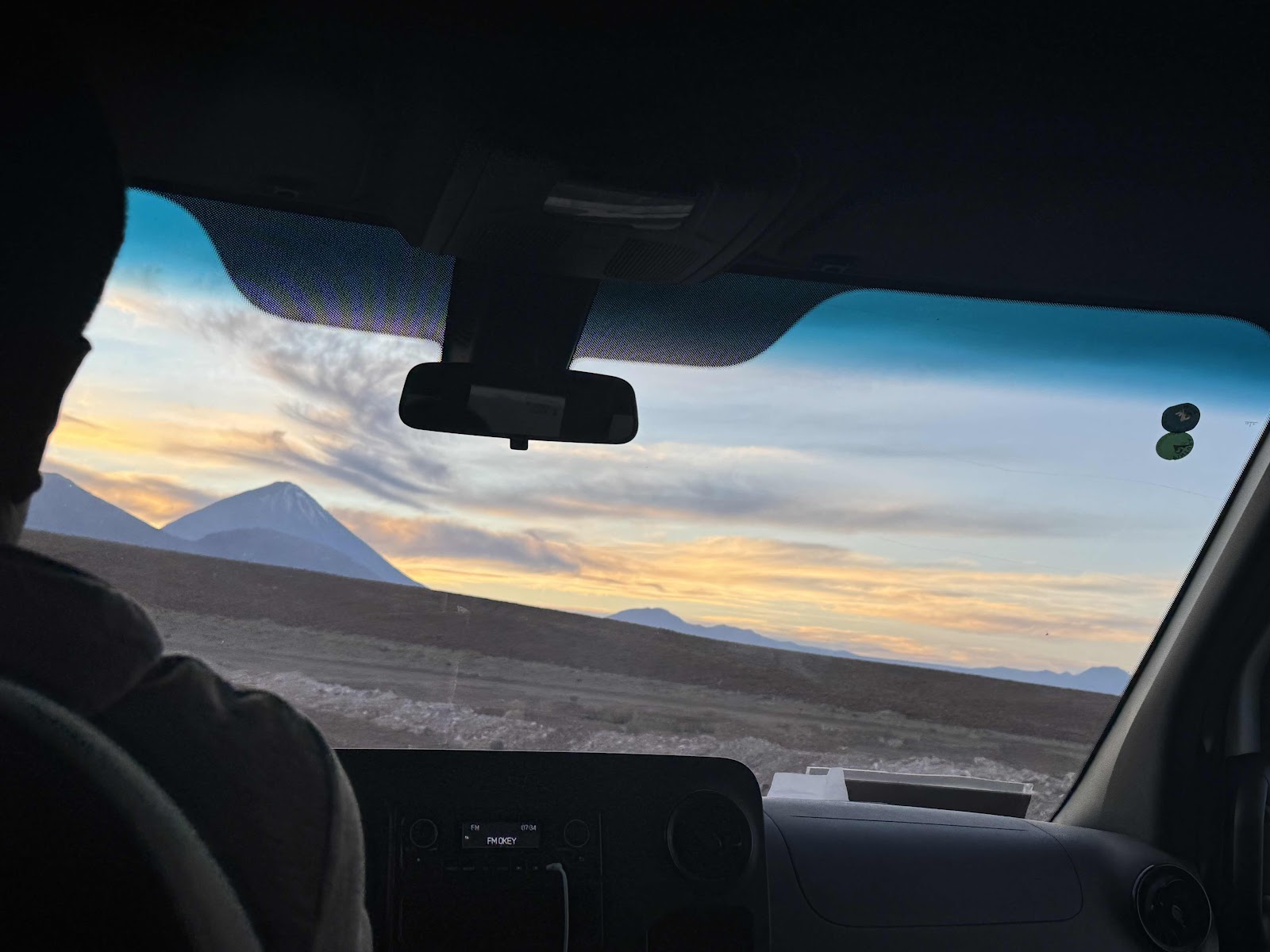
Kevin decided to stay in bed, so Jemima and I nabbed the front seats in a full van - 9 of us and two guides, watching the sun rise over the desert as we drove up into the Altiplano. We were glad of our layers - it was 5 degrees outside.


Soon the view was rolling green plains similar to the area where we nearly lost Baby, but skirted with more red rock (that I now know is volcanic ash), and as ever, ringed by the volcanoes on the horizon. And then we came upon another difference: a high altitude wetland brimming with birds: not just the flamingoes we’d seen on the salt flats, but all sorts of wading birds, Andean geese, and even giant coots, just like the English ones but on steroids. They had built nests in the middle of the water by gathering algae, and we could see baby coots, tiny balls of grey fluff staggering around them thanks to the binoculars of another guest (David and his wife Jane, from Putney as it turns out).


It was a day for animals: as we continued we saw a South American rabbit perched quietly on some stones; and three what looked like the South American version of a squirrel (I can’t remember what it’s called) scampering up a sheer rock face at lightning speed (no trees here). We also went through a couple of villages, one dominated by its huge flood-lit astroturf football pitch.


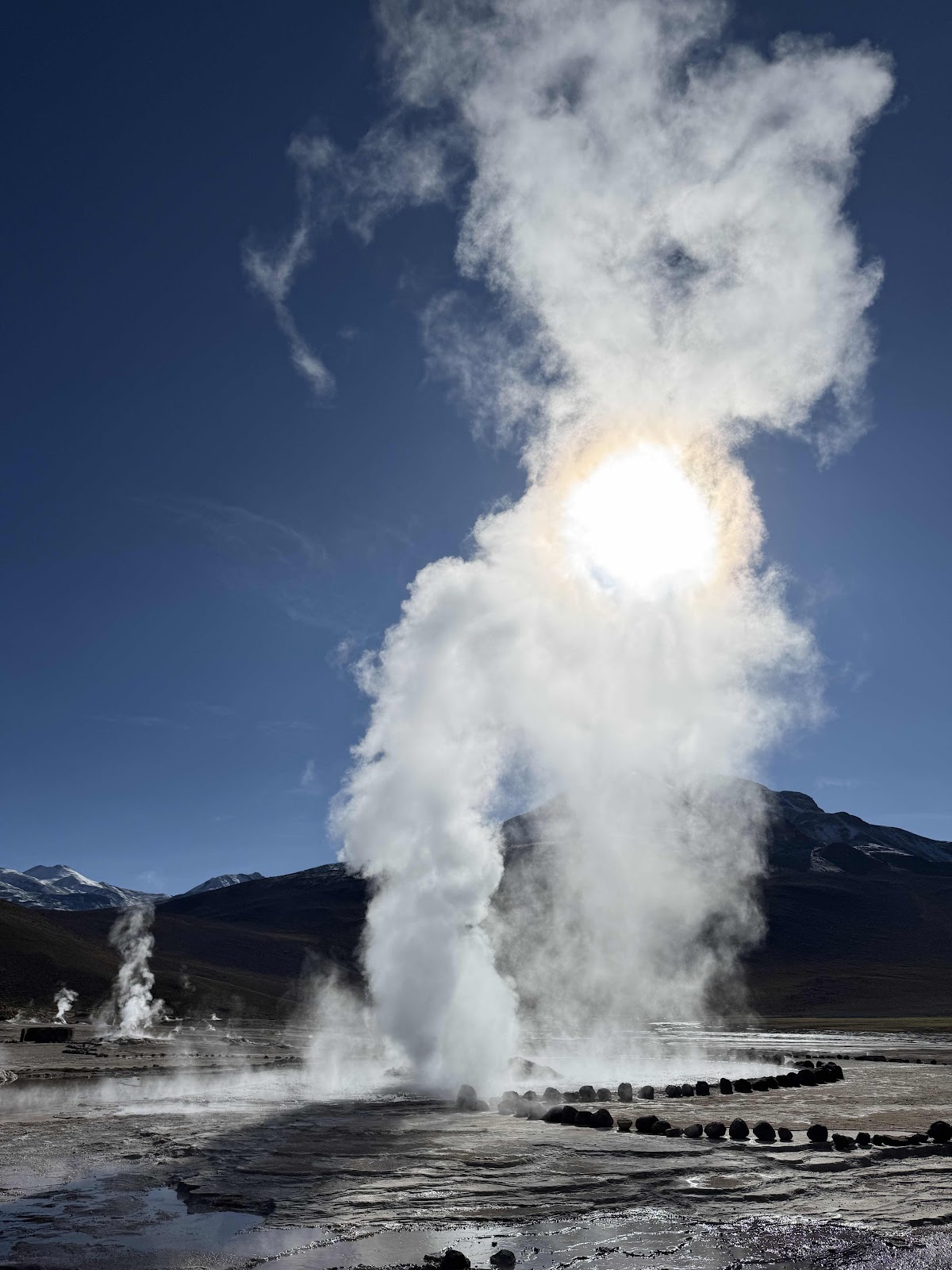
After an hour we reached the geyser field of El Tatio, at 4370m - the third largest in the world, by spread (not by height of the spouts, to Jemima’s disappointment). After a warning about not falling into the boiling water pools and dying, we were set free to walk on marked paths among the geysers. It didn’t smell strongly, unlike Rotorua in New Zealand which was very stinky - more like burnt milk than rotten eggs. You could see columns of steam rising from the ground, which looked very striking against the blue sky and snow-capped volcanoes, and when you got closer you could see geysers themselves bubbling up from the ground, but to no more than half a metre. The weirdest thing was watching families of vicuñas walk through the boiling water streams completely unharmed - including a gangly-legged baby, that looked very similar to a baby deer. (“Can you die from a cuteness overload?” asked the guide.)


Unfortunately the altitude was taking its toll on Jemima again - she seems fine up to 4000m, but struggles after that, so we went back to the van to wait for the others. Once we’d gone down a bit for our second breakfast stop she was fine again - we parked up opposite a beautiful green hill with more vicuñas and the remnants of shepherds’ shelters on it, and the guides and driver got out camping chairs and a breakfast picnic (much to the interest of the very nosy Andean gulls, which we’d had strict instructions not to feed). 


And then it was home time. The cuteness continued with a sighting of an Andean fox (like ours but bigger and greyer), some escaped llamas who were now roaming wild, some wild donkeys, and even more baby vicuñas up to their knees in the wetlands - just adorable. But unfortunately, on the journey a Brazilian lady we’d done the hot springs hike with started feeling very unwell - either car sickness or delayed altitude sickness - so I took her seat at the back so she could sit near the front (Jemima stayed at the front as she can get car sick too, next to Mary Beth from our previous afternoon’s hike). It turned out Mary Beth had to look after her as Jemima started feeling sick too, which I didn’t know about. But she quickly recovered once we were back at the hotel, ready for some maths by the pool before our afternoon adventure…


(One postscript: at dinner that night Juliana and her husband came to our table with a bottle of wine to say thank you to me for moving on the bus - but it was Juliana’s husband (who wasn’t sick) who gave the wine to Kevin (who wasn’t even there). VERY kind of them, so generous - but an interesting choice of process…)


Dawn over the volcanos


Vicuñas in front of a shepherd’s shelter


High altitude wetland, and a coot’s nest


Geyser field


Mum and baby vicuña unbothered

by boiling water


Second breakfast


Jemima and Mary Beth


The very hopeful Andean gull (the real
humour comes from when they walk,
which is sadly missing from a photo):


Baby vicuñas in the wetland